Be yourself; Everyone else is already taken.
— Oscar Wilde.
This is the first post on my new blog. I’m just getting this new blog going, so stay tuned for more. Subscribe below to get notified when I post new updates.
Be yourself; Everyone else is already taken.
— Oscar Wilde.
This is the first post on my new blog. I’m just getting this new blog going, so stay tuned for more. Subscribe below to get notified when I post new updates.
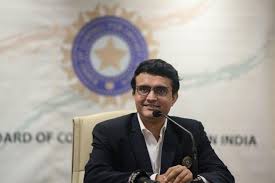
Those who sit in that president’s room at the Cricket Association of Bengal office and go on to become the chief of Board of Control for Cricket in India (BCCI) seem to have this ability to pull off out-of-the-box ideas. If Jagmohan Dalmiya was famous for those, his successor has started on a similar note. Not that day-night Tests are new. Eleven of them have already taken place, in six countries. But the first one in India is significant because of other reasons. If Test cricket needs a makeover to survive, it has to find acceptance at the game’s financial epicentre. By leading the initiative, Sourav Ganguly has begun his new innings on an impressive note.
It’s a bold move. The challenges confronting Test cricket are related not only to the hours of play. Duration and the prospect of a no-result after five days are its inherent drawbacks. Due to these and the thrills provided by the shorter formats, the sacred version has long lost its commercial relevance. But it continues to hold a place of pride among the fraternity, which keeps insisting that conserving this is priority. An eminent former captain championing its cause at the beginning of a fresh venture is a huge boost to an ailing industry. If India shows the way, Test cricket can think of a more meaningful existence.
Hosting the second India-Bangladesh Test under floodlights also shows that Ganguly the administrator is unafraid of taking tough decisions. Different interpretations were made of the circumstances in which he became the BCCI president in a team of young office-bearers. In one swift stroke, he has shown that he cares for the future of cricket and is different from the stereotypical board official more concerned with administrative politics.
A top-class former player calling the shots and getting heard in a set-up where cricketers were unwelcome is a big departure from the past. The path for Ganguly now on will have new challenges. By making a sound start, he has raised expectations that he will be different from those who used to deal with them in the past.Attachments area
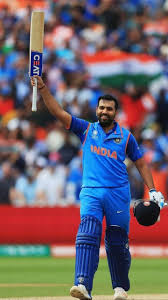
Clichés are the only things left to describe this man,” read a leading website’s live commentary blog when Rohit Sharma demolished Suranga Lakmal, hitting four sixes off the leader of the Sri Lankan attack. The scenario, however, wasn’t the same about four years ago. ‘Maggiman’, ‘Mr talent’ and ‘Indian Shahid Afridi’ were the only ‘adjectives’ used to describe the Indian opener. What transpired in the last four years that ‘Mr Talent’ became Ro-Hitman Sharma?
In ODI seriesbetween India and Sri Lanka in December 2017, held in Mohali, Indian team left the scar of defeat in the first ODI far behind them, after scoring a mighty total of 392/4 in 50 overs. And one man was in the centre of it all, Rohit Sharma.
Sharma scored an astonishing 203 off just 153 balls with a wonderful strike rate of 135.95. It was not the first time though; neither was he scoring his first ODI double ton, nor was it the first time when Sri Lankans were on the receiving end of a magical thrashing. The last time they were demolished in such a manner, the Mumbaikar went on to pile up 264 runs, making a record of the highest individual score at the highest level.
His first double had come in 2013 against the mighty Australians. That time he was the ‘Mr Talent’ of Indian cricket, who played brilliant shots on one ball and a foolish one to perish on the very next one. In fact, social media, although awe struck, felt it was a one time wonder or a fluke, to be more precise. But in 2014, the Mumbai Indians captain demolished the Lankans and that is when people started to realise that he is the hitman, and not the Maggiman.
In last three years, Rohit has transformed into a consistent and a prolific ODI batsman, consistently making big hundreds and batting deep into the innings. Some have even jumped to the conclusion that he is a modern-day great. What changed?
Rohit Sharma made his ODI debut back in 2007 and right from the start, Sharma looked promising. When India toured Australia in 2008, the Mumbaikar matched the batting great Sachin Tendulkar shot by shot in the first final of the Commonwealth Bank Series. In one over of Brad Hogg, Sachin Tendulkar displayed perfection by hitting the left-arm china man over the covers fielder for a four and a couple of balls later, Sharma played a shot which felt like watching the highlight of the previous shot played by the ‘god of cricket’. ‘This man has talent,’ the cricket pundits applauded. But then began the phase of the ‘Maggiman’.
Consistency in Rohit’s batting was only found in his failures. Sharma’s average before 2013 was just 30.43 and his strike rate even worse; 78 runs per 100 balls after 81 innings. Rohit was struggling in the middle order, but the then Indian Captain, MS Dhoni, although criticised severely, wasn’t ready to let this man go. In fact, eventually when selectors would drop him, Rohit would go back to domestic cricket and perform terrifically. But he struggled to replicate his domestic performance at the International level.
It was in South Africa in 2010-11 when Dhoni trusted Rohit Sharma to open the innings. But his returns in that three-match series were meagre – 29 runs off 59 balls; an average as low as 9.66 and a strike rate as terrible as 49. The experiment looked like a failed one and was quickly discontinued. Due to his shabby unreliable performance, Sharma missed the 2011 World Cup.
Fast forward to the year 2013; Rohit got another shot at opening the batting, and that opportunity changed his career and the fate of the Indian team.
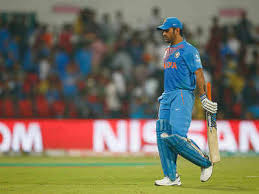
The world over, World Cups double as a chance for great players to retire is not seen very high its just retire for M.S.Dhoni. Cricket, especially Indian cricket, is an exception. For well over a decade, MS Dhoni gave the vibe he would break that mould. But another World Cup has come and gone, and Dhoni has not retired. For almost a decade, Dhoni ruled as India’s captain. Ever since he led the team to a spectacular triumph at the first T20 World Cup in 2007, through the World Cup win in 2011, and beyond, Dhoni was central to the imagination of the Indian cricket fan. But his time is up. India’s chief selector MSK Prasad made it abundantly clear last week when he said, while naming the squad for the upcoming series against Bangladesh, “We are focusing on Rishabh Pant only.”
After he retired from Tests, Dhoni kept himself relevant in the shorter formats of the game. His sustained success as Chennai Super Kings captain was proof that his tactical acumen was as razor-sharp as his ability to judge a run. At the Indian Premier League, Indians were served annual reminders that they couldn’t do without Dhoni. It rang true for a long time but Dhoni’s real success was in not letting people realise age was slowly catching up with him. At the World Cup in June, that realisation finally dawned. Dhoni, the great finisher, who could overhaul any total with his ice-cold guile between the wickets and his ability to hit big, found himself unable to do either. In the semi-final, the finest judge of a run was run out. It was India’s World Cup to lose, and they did.
India has moved beyond Dhoni. He hasn’t played a single game after the World Cup as India tries to fit in Wriddhiman Saha in Tests and Rishabh Pant or KL Rahul in the shorter formats. Sanju Samson has come into the mix too. It is a move, the chief selector said, that is endorsed by the man himself.
This is an example post, originally published as part of Blogging University. Enroll in one of our ten programs, and start your blog right.
You’re going to publish a post today. Don’t worry about how your blog looks. Don’t worry if you haven’t given it a name yet, or you’re feeling overwhelmed. Just click the “New Post” button, and tell us why you’re here.
Why do this?
The post can be short or long, a personal intro to your life or a bloggy mission statement, a manifesto for the future or a simple outline of your the types of things you hope to publish.
To help you get started, here are a few questions:
You’re not locked into any of this; one of the wonderful things about blogs is how they constantly evolve as we learn, grow, and interact with one another — but it’s good to know where and why you started, and articulating your goals may just give you a few other post ideas.
Can’t think how to get started? Just write the first thing that pops into your head. Anne Lamott, author of a book on writing we love, says that you need to give yourself permission to write a “crappy first draft”. Anne makes a great point — just start writing, and worry about editing it later.
When you’re ready to publish, give your post three to five tags that describe your blog’s focus — writing, photography, fiction, parenting, food, cars, movies, sports, whatever. These tags will help others who care about your topics find you in the Reader. Make sure one of the tags is “zerotohero,” so other new bloggers can find you, too.

 Site Title