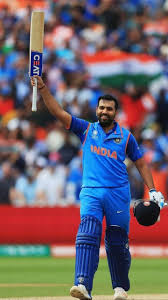
Clichés are the only things left to describe this man,” read a leading website’s live commentary blog when Rohit Sharma demolished Suranga Lakmal, hitting four sixes off the leader of the Sri Lankan attack. The scenario, however, wasn’t the same about four years ago. ‘Maggiman’, ‘Mr talent’ and ‘Indian Shahid Afridi’ were the only ‘adjectives’ used to describe the Indian opener. What transpired in the last four years that ‘Mr Talent’ became Ro-Hitman Sharma?
In ODI seriesbetween India and Sri Lanka in December 2017, held in Mohali, Indian team left the scar of defeat in the first ODI far behind them, after scoring a mighty total of 392/4 in 50 overs. And one man was in the centre of it all, Rohit Sharma.
Sharma scored an astonishing 203 off just 153 balls with a wonderful strike rate of 135.95. It was not the first time though; neither was he scoring his first ODI double ton, nor was it the first time when Sri Lankans were on the receiving end of a magical thrashing. The last time they were demolished in such a manner, the Mumbaikar went on to pile up 264 runs, making a record of the highest individual score at the highest level.
His first double had come in 2013 against the mighty Australians. That time he was the ‘Mr Talent’ of Indian cricket, who played brilliant shots on one ball and a foolish one to perish on the very next one. In fact, social media, although awe struck, felt it was a one time wonder or a fluke, to be more precise. But in 2014, the Mumbai Indians captain demolished the Lankans and that is when people started to realise that he is the hitman, and not the Maggiman.
In last three years, Rohit has transformed into a consistent and a prolific ODI batsman, consistently making big hundreds and batting deep into the innings. Some have even jumped to the conclusion that he is a modern-day great. What changed?
ROHIT SHARMA, BEFORE 2013
Rohit Sharma made his ODI debut back in 2007 and right from the start, Sharma looked promising. When India toured Australia in 2008, the Mumbaikar matched the batting great Sachin Tendulkar shot by shot in the first final of the Commonwealth Bank Series. In one over of Brad Hogg, Sachin Tendulkar displayed perfection by hitting the left-arm china man over the covers fielder for a four and a couple of balls later, Sharma played a shot which felt like watching the highlight of the previous shot played by the ‘god of cricket’. ‘This man has talent,’ the cricket pundits applauded. But then began the phase of the ‘Maggiman’.
Consistency in Rohit’s batting was only found in his failures. Sharma’s average before 2013 was just 30.43 and his strike rate even worse; 78 runs per 100 balls after 81 innings. Rohit was struggling in the middle order, but the then Indian Captain, MS Dhoni, although criticised severely, wasn’t ready to let this man go. In fact, eventually when selectors would drop him, Rohit would go back to domestic cricket and perform terrifically. But he struggled to replicate his domestic performance at the International level.
It was in South Africa in 2010-11 when Dhoni trusted Rohit Sharma to open the innings. But his returns in that three-match series were meagre – 29 runs off 59 balls; an average as low as 9.66 and a strike rate as terrible as 49. The experiment looked like a failed one and was quickly discontinued. Due to his shabby unreliable performance, Sharma missed the 2011 World Cup.
Fast forward to the year 2013; Rohit got another shot at opening the batting, and that opportunity changed his career and the fate of the Indian team.
 Site Title